Jim Bray's Car & Tech rants - publishing online exclusively since 1995

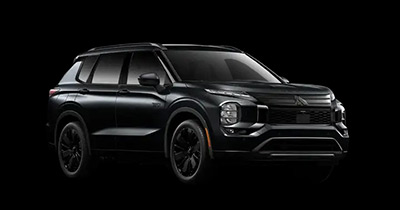
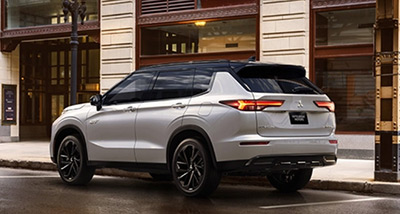
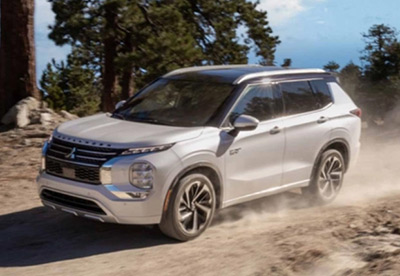
Mitsubishi Outlander PHEV a far from outlandish choiceBy Jim Bray Mitsubishi's popular Outlander SUV is back with a new battery for 2026 and a few other tweaks in a mid-cycle refresh designed to make the vehicle even more appealing to consumers. And it's a nice vehicle. I drove last year's PHEV model, which Mitsubishi generously lent me for a two week road trip from Calgary to Bellingham, Victoria and Qualicum. It acquitted itself well but, as a PHEV, a long road trip – while eminently doable - doesn't really exploit what the PHEV is best at: reducing your use of evil gasoline in favour of magical sparks. That's because no matter how great your EV range, a highway trip through the mountains is by no means the best way to maximize your electric mileage, though in the cities and towns we visited the plug-in aspect was very handy. If, that is, you can find a charging station or someone willing to lend you their external plugs.
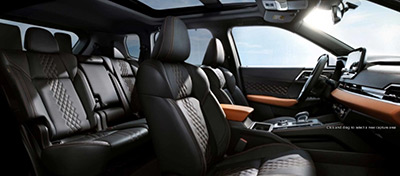
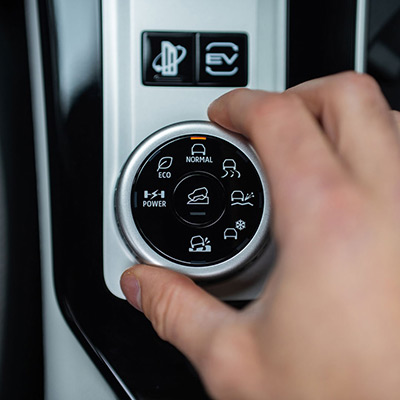
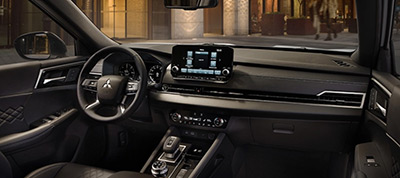
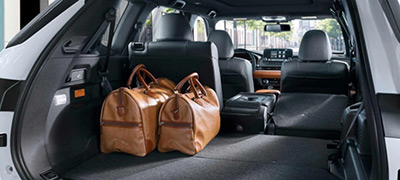
On the other hand, when Mitsubishi offered me this new version I got to try it in its natural habitat – and in the process I spent a week driving the vehicle (with my lead foot and all) in nearly total urban environments. And I managed to spend only 12 dollars on gasoline, most of which happened because I forgot to plug the thing in a couple of evenings. Now, I don't have a dedicated charger so I had to run an extension cord across my front lawn to plug it in. This is the slowest way to charge (and prone to pranking, though it hasn't happened to me) but in my urban test I never had a problem with the vehicle's overnight charge giving me enough juice for the next day. It worked out very well. Which means that, if you plan to use the Outlander PHEV as a city or commuter vehicle, with only occasional trips far away from the charger, you really can drive almost exclusively without using gasoline. This has been my brother's experience in Victoria. He's had a PHEV for a few years now and under normal conditions the only time he has to buy gasoline is when he's on road trips. He also has a dedicated charger in his parking garage, so that gives him the best of both worlds. For 2026, the Outlander Plug-in Hybrid's mid-cycle refresh includes larger battery capacity with increased all-electric range, which may have addressed some of my distance angst from a year ago. You also get a revised front and rear end and interior, and improved driving dynamics. Topping it all off, if such things are important to you, is a kick-butt Yamaha audio system that I enjoyed quite a bit. Mitsubishi says the increase in all-electric range decreases the time the internal combustion engine has to run, as well as giving better on-road acceleration. This is logical and, if you like being pressed back into the seatback when you tromp on the gas (electric?) pedal you'll love how an electric vehicle leaps into action. Just remember that the more leaping you do, the more time you'll spend at the charger. This may or may not be a big deal, depending on your lifestyle, itinerary and schedule. The new, 22.7 kWh battery offers up to 72 kilometres of EV-only range, they claim, an 18 per cent improvement from last year. Mitsubishi says the new configuration means a potential driving range of 690 km (between volts and gas). The interior features significant sound-deadening, new materials, new colours, heated and cooled front seats, a redesigned centre console (with a larger-capacity armrest storage bin), new cupholders and a redesigned phone charger. The exterior tweaks include new wheels on all trim levels and inside – besides the cavernous centre console bin, offers new seat materials and colour options as well as a new 12.3-inch infotainment display and updated digital driver display graphics. Basic specs include a 2.4 litre four-cylinder engine coupled to a twin motor electric system and what Mitsubishi calls a one-speed transmission that feels in real world use like a CVT (unfortunately). It also comes with paddle shifters but since there's only one speed, there's no shifting. Instead, the paddles let you control the amount of regenerative braking. I found this very handy when going down steep hills on our mountain trip last year: not only do you not have to use the brakes as much (to keep from barrelling down the mountain roads at increasingly breakneck speed) but – depending on the setting – it'll charge the battery more quickly. Handling is enhanced by Mitsubishi's famous Super All-Wheel Control (S-AWC) system with a drive mode selector that offers multiple settings for driving conditions from dry asphalt to "ye abandon hope". There's also active yaw control. The company also says they've revised the steering and ride quality via extensive tuning of the dampers, springs, stabilizer bars and bushings. I didn't really notice a difference from last year's, but may have if I'd driven them back-to-back on similar roads. That said, I have no reason to doubt Mitsubishi's take. Suspension comes via MacPherson Struts up front with a multi-link rear. Both ends get stabilizer bars and the brakes feature discs on all corners. Steering is power rack and pinion and it feels good. The seats are comfortable in the first two rows – and the guys up front get power adjustment, heating and cooling and even massage – the latter of which comes in really handy on a long road trip. My wife enjoyed the massaging a lot – she could get rubbed the right way while I was rubbing her the wrong way from behind the steering wheel. The third row is suitable for kids or people you don't like very much, but it's nice to have it there if you need it – and if you don't, you can just leave it folded down and take advantage of extra hauling space. The 2026 Outlander PHEV comes in seven trim levels, starting at the bottom with the ES S-AWC ($49,998) – and according to Mitsubishi it qualifies for the Electric Vehicle Affordability Program (EVAP) as well as for rebates available in some provinces, which means you can force your family, friends, neighbours and total strangers to help pay for your vehicle through their taxes whether they want to or not. Other trim levels include the SE S-AWC ($52,598), the LE S-AWC ($54,798), SEL S-AWC ($57,598). The GT S-AWC will set you back $60,598 while the GT PREMIUM S-AWC is $61,698 and the top-of-the-line GT NOIR S-AWC (the one I drove last year) is $63,048. Besides Outlander PHEV's coming with the added safety of Mitsubishi's legendary Super All-Wheel Control system, you also get a bunch of "safety-focused Advanced Driver Assistance Systems (ADAS)", which means you get all the usual nannies. Mitsubishi offers a nice warranty, too. The power train limited warranty covers the PHEV for 10-years or 160,000-kilometres, and the lithium-ion battery is also covered by a 10-year/160,000-kilometre limited warranty. There's also a five-year/100,000-kilometre New Vehicle Limited Warranty and you get five-year/Unlimited kilometre Roadside Assistance. Pretty nice stuff, altogether, from a vehicle that's quite competitive in this niche. And they even throw in a third row of seats, small as they may be. Not bad. Copyright 2026 Jim Bray |
||||||