Jim Bray's Car & Tech rants - publishing online exclusively since 1995

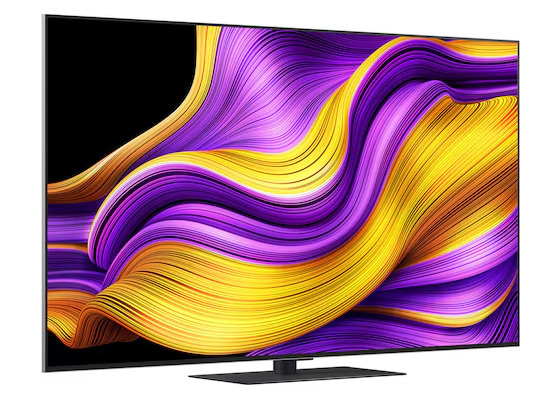
LG's top new OLED TV offers a spectacular pictureBy Jim Bray If you want the best picture money can buy here at the end of 2025, you should head over to your LG dealer and take a look at its G5 OLED line. Available in screen sizes from 55 to a whopping (and really expensive!) 97 inches, it's a simply marvelous technology that has actually been around for decades but which has only come into its own over the past decade or so, with LG usually at or near the forefront of its development and marketing. OLED TV's, as opposed to LCD and/or LED TV's, are different because each of its pixels is its own light source, so there's no back light or edge lighting needed like there is with "conventional" TV's. That means each pixel can turn on or off individually, or reproduce any colour that might be needed, on its own. This allows for blacker blacks, whiter whites and richer colours. Sounds like a laundry detergent commercial, doesn't it? It also allows for excellent off axis performance, which could come in handy if people are seated all over your viewing room. This bonus performance brings a premium price, but not nearly as much as in the old days. I remember seeing my first OLED TV years and years ago at a Sony retailer. It was a pitiful 12-inch screen and they were asking something like $2500 CAD for it at the time. Technology marches on, and I've just had the pleasure of spending time with the 65-inch LG G5, which offers a picture so spectacular I was contemplating selling my grandchildren to keep it – though in my home theatre I'd be more at home with the 83 inch version that, if LG had sent it instead, I would have purchased a firearm to prevent from being sent back after my review. And, yes, OLED is still comparatively pricey compared to lesser TV's. That said, however, as I write this, LG's Canadian website has the 65-inch G5 listed for $3499 when not on sale. That compares to the 75-inch QLED I bought some eight years ago – a fine TV that has served me well but which I would put in the alley behind my house if an OLED of similar or larger size were to arrive – which retailed for more than that back then. At its heart is a new second-generation MLA (Micro Lens Array) OLED panel that's claimed to offer brightness nearly half again as bright as even lesser OLED's. It's so bright that I found it dazzling to my eyes and was grateful to have a bias light mounted (temporarily, since it had to go back) on the rear panel of the OLED TV. Usually, when I get or review a TV, I calibrate its picture using the test patterns that come on some test discs. And that means I usually turn the picture's brightness down because they're usually quite hot when they come out of the box. I couldn't do that here. Oh, I fired up the test disc and put on a pluge test (which is great for setting brightness on conventional TV's). Then I took it back out again because to turn down the brightness so the pluge test was happy would have made me weep like a little baby. So, I left the brightness where it was and thanked the home theatre gods that there are bias lights that take some of the "dazzle" out of the picture and make it appear more natural. As an aside, this means that if you like your TV and watch it in a fairly dark room, you'll probably benefit from a bias light. LG notes that the G5 is powered by an α11 AI Processor 4K Gen2, and offers AI Super Upscaling 4K to help drag lower resolution content (whether kicking and screaming or not) to fake (and pretty darn good fake) 4K. The chip also supposedly handles dynamic tone mapping and more, and supports Dolby Vision, HDR10, and HLG. The G5 runs at a native 120Hz (and supports 4K 144Hz/165Hz via PC) which initially rubbed me the wrong way because 60 Hz is the natural rate and doubling that to 120Hz on many TV's gives you the "soap opera effect" that looks really smooth at first glance, but which can ultimately look fake, as if everything you're watching was shot in a studio even if it's a sweeping epic shot outdoors. You can get around the soap opera effect by shutting off whatever motion smoothing technology your TV may have. LG calls it TruMotion, while other TV makers might call it something like Auto Motion Plus, MotionFlow, etc. The downside is "judder," which is kind of a jerky/blurring of the picture during shots with panning motion in them. It's off-putting, but it beats the heck out of the fake-looking soap opera effect. Naturally, your mileage may vary depending on what you watch and how you watch it. But I'd rather have judder (which, to be fair, isn't bad on this OLED TV anyway), than the alternative. There's an even easier way to get around the judder/soap opera issue, however. That's Filmmaker mode, which supposedly shuts all that stuff off. In fact, while I tried most of the various picture modes (Cinema mode was pretty close, but with no cigar awarded), I preferred Filmmaker mode regardless of what source I was watching. That said, I never did any gaming or watched, in my limited time with the G5, sports events and that kind of thing. But I did watch a lot of TV and movies (including many 4K-native discs) and was absolutely gobsmacked by the G5's picture quality. I've seen quite a few OLED TV's over the years, but this one was absolutely spectacular, a picture quality I could live with happily for the rest of my days (or at least until something even better comes along, which I doubt will be soon). One of the things I love about OLED is how it seems to bring out the nuances in the source video, compare with standard 4K LCD displays, thanks to its excellent contrast and broader colour spectrum. And this G5 does an incredible job of it. Yeah, well, while it works pretty much as advertised, if you really want great sound you'd still be better served shelling out for a good sound bar or, what I do, run the TV through your main audio system. Well, I usually do that, but in my home theatre the audio equipment rack is to the right of the TV and the LG's inputs are on the left of the rear panel – so my optical audio cable wouldn't reach. Not a big deal if I were keeping the TV: just get a new cable – but in this case I had to use the TV's built in speakers for my Roku and Amazon Fire, where they worked fine but left me missing my 250 watts per channel amp. Fortunately, my 4K disc player patches directly into the audio stack (I use analogue cables for that) and its HDMI stretches far enough to reach the LG. This was the cat's meow! The G5 uses webOS 24, and its interface is reasonably straightforward – though with so much stuff and so many "helpful hint thingies" that it's more than a tad busy. But if you don't have a streaming device such as the Roku, Amazon or whatever, you can access a huge library of streaming stuff and various apps. The TV also does Google Assistant, Amazon Alexa, Apple AirPlay 2, and HomeKit. I hate these things – heck, I'd be happy if my OLED TV was just a monitor and offered no speakers, apps, or whatever. I do like to stream from my phone or tablet sometimes, however. Navigating the home screen is done via LG's Magic Remote, which I really didn't care for much. The remote is okay, though since there's no backlighting on it, it can be hard to see what button is what when you're watching in a darkened room. I also hated the "Wii-like" feature where you aim the remote at the screen and virtually drag a cursor around it to whatever icon you're seeking. It's fussy and annoying. Apparently, you can use the remote conventionally, too, scrolling around the screen via its own buttons, but I didn't learn this in time to try it before I had to pack the TV back up. Duh. There are plenty of connectivity choices available, of course. There's Wi-Fi, four HDMI 2.1 ports, and eARC support for audio passthrough (I've never been able to get this to work properly in my system, however, regardless of which TV I've tried. Not sure if that's a design issue or operator error, so I'll blame the TV makers…). You can also connect via Bluetooth. None of this stuff matters to me as much as the spectacular picture does, even the stuff that rubbed me the wrong way (like the interface), and I would gladly put up with any of it to get this remarkable picture. Heck, I watched some spectacular 4K content in my review period and the more I saw, the more I liked. As with everything in life, quality differs from disc to disc, but give the G5 a fine signal and it steps up to bat beautifully. Some of the best 4K discs I viewed as reference discs on the LG included the Lord of the Rings trilogy, Gemini Man (which is presented at 4K 60Hz native and looks so clean it looks almost like soap opera effect without the soap opera effect), Titanic, the Fifth Element, Deadpool, 2001: a space odyssey, Dragonslayer, F1 and many others. Even some of my favourite top quality Blu-rays looked spectacular. It was a real treat for the eyes, let me tell you! The downside to reviewing a top quality OLED is that my own reference TV, a 75-inch QLED vintage about 2018 – with which I've been extremely happy – looks flat and dim now that it's back where it belongs. It's really annoying. So, I guess I'll be saving up my pennies – well, nickels – and being really nice to my dear wife in hopes she deigns to let me upgrade. Until then, I'm going to hold my breath till my face turns blue. I bet that blue would look great on the LG OLED, too. Copyright 2025 Jim Bray |